Mantralayam river bath is a traditional part of many devotees’ visit to Sri Raghavendra Swamy’s Brindavana, but the river should never be treated like a fixed-timing bathing tank. The official Sri Raghavendra Swamy Matha guidance asks pilgrims to bathe in the holy Tungabhadra and visit Manchalamma before entering the Matha. However, river depth, current and access can change, so the safest plan is to check the ghat on arrival and follow same-day instructions.
Independence note: srsmatha.org.in is an independent Mantralaya pilgrim guide. It is not affiliated with, endorsed by, or the official website of Sri Raghavendra Swamy Matha. We do not take room, seva, donation or other payments. Use the official Matha website for official notices and services.
Mantralayam River Bath at a Glance
- The Tungabhadra flows beside Mantralayam, which the Kurnool district administration identifies as a riverside pilgrimage town.
- The official Matha’s Brundavana guidance recommends a bath in the Tungabhadra before visiting Manchalamma and entering the Matha.
- The Matha does not publish fixed river-bathing hours on that guidance page.
- A map listing that says a ghat is “open 24 hours” does not mean river entry is safe or permitted at every hour.
- Strong current, high water, slippery steps, darkness or barricades are reasons to stay out of the river.
- Families with children, seniors and anyone with poor balance should use extra caution and avoid deep or fast water.
The most useful way to think about the river is simple: the ghat is a natural river edge, not a controlled pool. Water conditions can change after rainfall and upstream releases. Therefore, local restrictions and visible conditions matter more than any old timing copied from a travel page.
What Does the Official Matha Say About Bathing in the Tungabhadra?
The official Sri Raghavendra Swamy Matha Brundavana guidance places the Tungabhadra bath before Manchalamma darshan and entry into the Matha. That makes the river bath part of the traditional pilgrimage sequence described by the Matha. However, the same public page does not publish a separate ghat timetable, water-depth limit or detailed bathing rule list. For that reason, a Mantralayam river bath is best understood as traditional guidance shaped by same-day river conditions.
This distinction matters because many travel pages turn a devotional custom into a rigid operational rule. The Matha recommends the sequence, yet its public guidance does not say that a person will be denied Brindavana darshan for not entering the river. If illness, age, high flow or a local restriction makes the bath unsafe, do not take a physical risk to imitate a normal-day routine.
For a broader darshan-first schedule, our Mantralayam one-day itinerary shows how to protect the main Matha visit without overloading the day.
Where Is the Tungabhadra Bathing Ghat in Mantralayam?
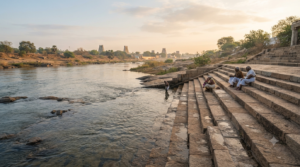
A Mantralayam river bath normally begins at the Tungabhadra riverbank near the main pilgrimage core, so pilgrims usually reach it on foot from the Matha side of town. Local map services label the riverfront as Tungabhadra River Ghat or similar names. Still, labels and pin positions can vary, so follow the marked pedestrian route and local signs after you arrive.
The Kurnool district government confirms that Mantralayam stands on the banks of the Tungabhadra. Our own guide to places to visit near Mantralaya also groups the river ghat with the town’s walkable sacred area. You do not need a private guide or paid “river access” service to locate the public riverfront.
Avoid following someone toward an unmarked bank just because the water looks quieter there. Formal steps and commonly used access points are easier to assess, while raw riverbanks can hide mud, uneven rock or sudden drop-offs.
Mantralayam River Bath Timings: Is There an Official Schedule?
There is no fixed Mantralayam river bath timetable published on the official Matha Brundavana guidance page. The river itself does not operate like a temple hall with opening and closing bells. Therefore, do not treat a Google Maps “open 24 hours” label as an official bathing schedule or a statement that entering the water is safe at night.
For most pilgrims, early daylight is the practical window because it fits the traditional pre-darshan sequence. The official Matha contact page currently lists Brindavana darshan from 6:00 AM to 2:00 PM and again from 4:00 PM to 8:30 PM. Those are darshan hours, not river-bath hours, so keep the two separate.
If you arrive before sunrise, first check visibility, lighting, current and any barricades. Darkness makes slippery steps and changing water depth harder to judge. When conditions are doubtful, wait for better light or ask Matha staff and local authorities before entering.
How to Take a Tungabhadra River Bath Before Darshan
A safe pilgrimage routine should be short and simple because the purpose is devotional, not recreational swimming. Use the established ghat area, keep to shallow water and leave immediately if the current feels stronger than expected. The steps below are practical safety guidance, not a substitute for instructions given on the spot.
- Check the river first. Look for barricades, warnings, fast current, submerged steps and slippery algae before you enter.
- Use the regular ghat access. Avoid isolated banks, rocks or shortcuts even if other people are standing there.
- Keep valuables minimal. Carry only what you need, because phones, wallets and bags are difficult to manage on wet steps.
- Enter only as far as comfortable. A ritual bath does not require swimming into deeper water.
- Help children and seniors closely. Wet stone can be unstable, while river current can change quickly.
- Change into dry, modest clothing. Then proceed to Manchalamma and the Brindavana according to your family practice.
If you are travelling with elderly parents or young children, our Mantralaya family trip guide has a slower schedule with rest and safety buffers.
Mantralayam River Bath Safety During High Water
A Mantralayam river bath can look routine on a calm morning, but the biggest mistake is assuming that a familiar-looking river is always calm. The Central Water Commission has a flood-forecast station at Mantralayam, and past advisories have placed the Tungabhadra there in above-normal flood conditions. The Tungabhadra Board also publishes changing reservoir inflow and outflow data, which shows why downstream conditions cannot be reduced to one permanent “safe” level.
Before a monsoon-season visit, you can check the Tungabhadra Board reservoir updates and the Central Water Commission. Even so, upstream reservoir figures do not tell you whether a specific bathing step is safe at that moment. Local barricades and on-site instructions take priority.
| Condition | What to do | Why |
|---|---|---|
| Normal-looking shallow edge | Check steps and current before entering | Depth can change within a few steps |
| Fast or muddy flow | Stay out | Current and footing are harder to judge |
| Barricade or warning | Do not cross it | Access may be restricted for safety |
| Darkness or poor visibility | Wait for daylight | Slippery edges are harder to see |
| Child, senior or poor balance | Use extra support or skip river entry | Falls and current create higher risk |
What If the River Is Unsafe or Bathing Is Restricted?
If the Tungabhadra is unsafe, do not enter it. There is no devotional benefit in ignoring a barricade, flood warning or obvious strong current. Freshen up at your room or another safe bathing facility, then ask Matha staff locally if you want guidance on the customary sequence for that day.
This is also the correct fallback when water is too low, the steps are muddy or someone in your group cannot safely use the ghat. The outcome is never guaranteed because a natural river can change after rain or dam releases. Therefore, build enough time into the morning that a delayed or skipped dip does not make the rest of the pilgrimage rushed.
Do not pay an agent who claims to provide “special ghat access” or a guaranteed safe dip. Use public access points and follow official or local authority directions.
Rules and Etiquette at the Tungabhadra Ghat
For a Mantralayam river bath, the official Matha page does not publish a detailed river-ghat rulebook, so it is better to separate verified guidance from sensible river etiquette. The verified point is the traditional sequence: Tungabhadra bath, Manchalamma visit, then Matha entry. Other behaviour should follow posted signs, local instructions and basic respect for a shared sacred riverbank.
- Do not cross barricades or ignore a closure notice.
- Do not treat the ghat as a swimming or diving spot.
- Keep children within arm’s reach near wet steps and flowing water.
- Avoid soap, shampoo and detergent in the river, because a sacred river is also a shared natural waterway.
- Do not leave plastic bags, clothing, food wrappers or ritual waste on the steps.
- Use modest clothing and change discreetly in an appropriate facility.
- Give space to other pilgrims who may be praying or performing family rituals.
These points are practical etiquette, not a claim that each one appears in a formal Matha regulation. If staff display a same-day instruction at the ghat, that instruction should override general travel advice.
Best Season for a Tungabhadra Bath
No season can guarantee safe river entry, because rainfall and reservoir releases vary. However, Kurnool district describes April and May as its hottest months, so midday heat can make a river visit uncomfortable. Cooler months are easier for walking, while monsoon and post-rain periods demand more caution around water levels and current.
The practical choice is to plan the river visit around daylight, weather and the day’s flow rather than a calendar promise. Check local conditions after arrival. If the water looks forceful or officials restrict access, skip the dip regardless of season.
Footwear also matters. Wear sandals with grip for the walk to the river, then remove them only where appropriate. Smooth stone can stay slippery even when the surrounding steps look dry.
What Most Guides Get Wrong About the River Ghat
The first error is publishing “24 hours” as if it were an official bathing time. Map services may list a riverfront location as always open, but that only describes place access. It does not certify darkness, water depth, current or temporary restrictions.
The second error is calling the bath compulsory without qualification. The official Matha guidance recommends the bath as part of the pilgrimage sequence. However, its public page does not state that river immersion is an entry condition for Brindavana darshan.
The third error is treating river conditions as fixed. Central Water Commission records show that Mantralayam itself is a flood-forecast location on the Tungabhadra. Therefore, advice written for a low-flow visit should not be copied into a high-flow day.
A Practical Morning Plan for the Ghat and Brindavana
Keep a Mantralayam river bath plan flexible because the river decides the first step. Arrive near the ghat in daylight, check conditions and take a brief bath only when access looks safe. Dry off and change, then continue to Manchalamma and the Brindavana without trying to turn the river visit into a long sightseeing stop.
If the river cannot be used, switch immediately to the fallback. Freshen up safely, ask local staff if needed and protect your darshan window. The official Matha currently lists morning darshan from 6:00 AM to 2:00 PM, so unnecessary delay at the river can cost useful queue time on busy days.
Carry water for drinking, but do not assume river water is suitable to drink. Anyone with a medical condition, open wound, poor balance or reduced mobility should make a cautious choice about entering natural water.
Before You Go to the Tungabhadra Ghat
A Mantralayam river bath is best approached as a short devotional act with a strong safety margin. The official Matha supports the traditional river-bath sequence, while government water records show why conditions can change. Both facts can be true at the same time.
Check the river in person, follow barriers and local directions, and stay out when current or footing looks unsafe. Then continue your pilgrimage without letting a skipped dip become a source of anxiety. For official changes to darshan or Matha services, always recheck srsmatha.org before travel.
Frequently Asked Questions
Is the Mantralayam river bath compulsory before Raghavendra Swamy darshan?
The official Matha recommends bathing in the Tungabhadra before visiting Manchalamma and entering the Matha. However, its public guidance does not state that river immersion is a condition for darshan. If the river is unsafe or restricted, follow local instructions rather than taking a risk.
What are the Tungabhadra bathing ghat timings in Mantralayam?
The official Matha does not publish fixed bathing-ghat hours on its Brundavana guidance page. Therefore, do not treat crowd-sourced “24 hours” map listings as an official bathing schedule. Use daylight where possible and check same-day access conditions.
Where is the Tungabhadra ghat in Mantralayam?
The ghat is on the Tungabhadra riverbank near Mantralayam’s main pilgrimage area. Local map services label it as Tungabhadra River Ghat or a similar name. Follow marked routes and signs after arrival rather than using an isolated riverbank shortcut.
Is the Tungabhadra River safe for children and seniors?
Safety depends on the day’s water level, current and footing. Children, seniors and anyone with poor balance need extra support because wet steps can be slippery. If the flow looks strong or access is restricted, they should not enter the river.
Can I bathe in the Tungabhadra at night?
Night bathing is a poor choice when visibility is limited, even if a map listing says the ghat is open. River depth, current and slippery steps are harder to judge in darkness. Wait for daylight unless local authorities clearly provide a safe, lit arrangement.
What should I do if the river-bath area is closed?
Do not cross a barricade or use an unmarked bank. Freshen up at your accommodation or another safe facility, then continue your visit and ask Matha staff if you need guidance on the day’s customary sequence. A closure should never be bypassed.
Does the river level change because of Tungabhadra Dam releases?
River conditions downstream can change with rainfall, inflows and reservoir operations. The Tungabhadra Board publishes changing reservoir inflow and outflow data, while the Central Water Commission monitors flood conditions at Mantralayam. Those sources are useful for context, but local ghat instructions still decide whether you should enter.
Should I use soap or shampoo during a holy river bath?
Avoid soap, shampoo and detergent in the Tungabhadra. This is sensible river etiquette because the waterway is shared by pilgrims, residents and the wider environment. Keep the ritual bath brief, then use normal washing facilities elsewhere.
What should I carry for a Tungabhadra river bath?
For a Mantralayam river bath, carry a small towel, dry modest clothing, water to drink and only essential valuables. Use footwear with good grip for the walk to the ghat. Keep your phone and wallet protected from water, and avoid carrying a large bag onto wet steps.