The Raghavendra Ashtottara Shatanamavali is a garland of 108 sacred names of Sri Raghavendra Swamy, the beloved Madhwa saint of Mantralaya whom devotees affectionately call Rayaru. Each name opens a small window into his life, his scholarship and his boundless grace. Because these names carry the devotion of centuries, families chant them daily, and especially on Thursdays and during his annual Aradhana. Here you will find all 108 names, a clear meaning for each, and simple guidance on how to recite them at home.
Please note: srsmatha.org.in is an independent devotional guide created for Sri Raghavendra Swamy devotees. We are not the official Sri Raghavendra Swamy Matha, and we take no bookings, sevas or donations. For official seva bookings, room reservations and e-hundi offerings, always use the official Matha portal at srsmatha.org. The Matha has publicly warned against look-alike websites and private agents who ask for payment, so please book only on the official site.
Quick Facts About the 108 Names
- What it is: a namavali of 108 names of Sri Raghavendra Swamy, each recited as “Om … namah”.
- Composed by: Sri Appanacharya, a close and devoted disciple of Rayaru.
- Whom it praises: Sri Raghavendra Tirtha (1595–1671), the Dvaita saint whose Brindavana stands at Mantralaya.
- Best times to chant: daily, and above all on Thursdays and during the yearly Aradhana.
- Language: Sanskrit, though you may also reflect on the meanings in your own mother tongue.
What Is the Raghavendra Ashtottara Shatanamavali?
The Raghavendra Ashtottara Shatanamavali is a devotional hymn that lists 108 names of Sri Raghavendra Swamy. “Ashtottara shata” means one hundred and eight, while “namavali” means a string of names. Each name praises one quality, deed or scholarly work of the saint. Devotees add “Om” before every name and “namah” after it, so the practice becomes a flowing offering of salutations.
Reciting 108 names is an ancient way of worship across the Hindu tradition. While one person chants, another often offers flowers, tulasi or akshata (turmeric-coloured rice) at each name. This form of worship is called an archana, and it turns simple listening into an active, heartfelt seva.
Who Composed the Raghavendra Ashtottara Shatanamavali?
Sri Appanacharya composed the Raghavendra Ashtottara Shatanamavali out of deep personal devotion to his guru. He was the same devotee who wrote the famous Raghavendra Stotra, the hymn that begins “Sri Poornabodha Tirthesha”. Tradition holds that Appanacharya lived so close to Rayaru that he could put the saint’s greatness into verse better than anyone.
Because Appanacharya knew Rayaru’s works and character first-hand, his 108 names read almost like an eyewitness record. Many names point directly to the books the saint wrote, and others recall the miracles devotees witnessed. The closing verse of the hymn even notes the sacred Sravana month, tying the composition to a specific, auspicious time.
A Short Life Behind the 108 Names
Sri Raghavendra Swamy was born in 1595 as Venkatanatha, in Bhuvanagiri near Chidambaram in present-day Tamil Nadu. His family belonged to a line of veena players and Sanskrit scholars, and his great-grandfather had served in the court of the Vijayanagara emperor Krishnadevaraya. Even as a boy, Venkatanatha shone in the Vedas, logic and music.
He later took sanyasa under Sri Sudhindra Tirtha and received the monastic name Raghavendra Tirtha. Scholars honoured him with titles such as “Sudha Parimalacharya” and “Sarvatantra Svatantra”, because he had mastered every branch of learning. You can read more about the full life history of Sri Raghavendra Swamy and its many turning points.
In 1671, after guiding countless devotees, he entered Brindavana at Mantralaya on the bank of the Tungabhadra river. Devotees believe he remains present in his Brindavana, still blessing all who come. His great works — the Parimala, the Chandrika commentary, the Tantra Dipika, the Nyayamuktavali, his Gita and Upanishad commentaries, and his Rig Veda commentary — appear one after another among the last names of the hymn.
The Complete Raghavendra Ashtottara Shatanamavali (108 Names with Meaning)
Below are all 108 names of the Raghavendra Ashtottara Shatanamavali with a short, easy meaning for each. These are simple devotional glosses meant for everyday understanding, since classical commentaries often explain each name in far greater depth. Spellings and transliteration differ a little across published versions, so small variations you may have seen elsewhere are not “mistakes”.
Names 1–18: The Purifier and Protector
These opening names set the tone, since they praise Rayaru as a purifier of sin and a shield against harm of every kind.
Om Svavagdevata-sari-sadbhakta-vimalikartre namah — Purifies sincere devotees dear to his speech-goddess
Om Sri Raghavendraya namah — Salutations to Sri Raghavendra
Om Sakalapradatre namah — Giver of all good things
Om Bhaktaghasanchedana-vrishti-vajraya namah — Thunderbolt that shatters devotees’ sins
Om Kshamasurendraya namah — Chief among forbearing sages
Om Haripada-kanja-nishevanal-labdha-samasta-sampade namah — Won all wealth by serving Hari’s feet
Om Devasvabhavaya namah — Of a divine nature
Om Divijadrumaya namah — Like the celestial wish-tree
Om Ishtapradatre namah — Granter of cherished desires
Om Bhavasvarupaya namah — Embodiment of auspicious being
Om Bhavaduhkha-tula-sangagni-charyaya namah — Fire that burns worldly sorrow like cotton
Om Sukhadhairyashaline namah — Full of serenity and fortitude
Om Samasta-dushta-graha-nigrahesaya namah — Master who curbs all malefic planets
Om Duratyaya-upaplava-sindhu-setave namah — Bridge across the sea of calamity
Om Nirasta-doshaya namah — Free of every fault
Om Niravadya-veshaya namah — Of a blameless, holy appearance
Om Pratyarthi-mukatva-nidana-bhashaya namah — Whose speech silences opposing debaters
Om Vidvat-parijneya-mahavisheshaya namah — Whose greatness only the learned grasp
Names 19–36: The Guru and Great Debater
As the hymn moves on, the next names honour him as a teacher and an unbeaten debater whose words could settle any argument.
Om Vagvaikhari-nirjita-bhavyasheshaya namah — Whose eloquence overcame all worthy rivals
Om Santana-sampat-parishuddha-bhakti-vijnana-vak-deha-supatavadi-datre namah — Gives children, wealth, devotion, knowledge and eloquence
Om Sharirottha-samasta-dosha-hantre namah — Remover of all bodily ailments
Om Sri Guru Raghavendraya namah — Salutations to the holy Guru Raghavendra
Om Tiraskrita-suranadi-jala-padodaka-mahimavate namah — Whose foot-water surpasses the heavenly Ganga
Om Dushtapatrayanasanaya namah — Who thwarts the designs of the wicked
Om Mahavandhya-suputra-pradaya namah — Grants worthy sons even to the barren
Om Vyanga-svanga-samriddhidaya namah — Restores sound limbs to the disabled
Om Grahamahapapahaya namah — Dispeller of grave sins and planetary evils
Om Durita-kanana-davabhuta-svabhakta-darshanaya namah — Whose darshan burns devotees’ sins like wildfire
Om Sarvatantra-svatantraya namah — Sovereign master of all learning
Om Sri Madhvamata-vardhanaya namah — Promoter of Sri Madhva’s philosophy
Om Vijayindra-karabjottha-sudhindra-varaputrakaya namah — Worthy disciple in the Sudhindra–Vijayindra line
Om Yatiraje namah — King among ascetics
Om Gurave namah — The revered preceptor
Om Bhayapahaya namah — Remover of fear
Om Jnana-bhakti-suputra-ayur-yashah-sri-punya-vardhanaya namah — Increaser of wisdom, devotion, progeny, life and merit
Om Prativadi-jaya-svanta-bheda-chihnadaraya namah — Marked by victory over rival debaters
Names 37–54: Master of All Knowledge
Here the names turn to his vast learning, because devotees saw him as a master of every branch of knowledge.
Om Sarvavidya-pravinaya namah — Proficient in every branch of knowledge
Om Aparokshikrita-srisaya namah — Who gained direct vision of the Lord
Om Samupekshikrita-bhavajaya namah — Who has utterly conquered desire
Om Apekshitapradatre namah — Giver of whatever is longed for
Om Daya-dakshinya-vairagya-vakpatava-mukhankitaya namah — Adorned with mercy, generosity, detachment and eloquence
Om Sapanugrahasaktaya namah — Able both to curse and to bless
Om Ajnana-vismriti-bhranti-samshaya-apasmriti-kshayadi-dosha-nashakaya namah — Destroyer of ignorance, forgetfulness, delusion and doubt
Om Ashtakshara-japeshtartha-pradatre namah — Grants the fruits of the eight-syllable mantra
Om Atmatmiya-samudbhava-kayaja-dosha-hantre namah — Removes bodily ills of oneself and one’s kin
Om Sarva-pumartha-pradatre namah — Grants all four aims of life
Om Kalatraya-prarthanakartri-aihika-amushmika-sarveshta-pradatre namah — Grants every wish, here and hereafter, to the thrice-daily worshipper
Om Agamya-mahimne namah — Of unfathomable glory
Om Mahayashase namah — Of great and lasting renown
Om Madhvamata-dugdhabdhi-chandraya namah — Moon of the milk-ocean of Madhva’s school
Om Anaghaya namah — The sinless one
Om Yathashakti-pradakshinakartri-sarvayatra-phaladatre namah — Grants the fruit of all pilgrimages to those who circle his shrine
Om Shirodharana-sarvatirtha-snana-phaladatri-svavrindavanagata-jalaya namah — Whose shrine-water on the head equals bathing in all tirthas
Om Karana-sarvabhishtadatre namah — The cause and giver of every wish
Names 55–72: The Healer and Refuge
Many of these names speak of healing and refuge, so the sick and the frightened have always held them close.
Om Sankirtanena-vedadyartha-jnanadatre namah — Grants Vedic understanding to those who sing his praise
Om Samsara-magna-janoddhara-kartre namah — Rescuer of those drowning in worldly life
Om Kushtadi-roga-nivartakaya namah — Revered in tradition as a healer of disease
Om Andha-divyadrishti-datre namah — Believed to have restored sight to the blind
Om Edamuka-vakpatitva-pradatre namah — Gave fluent speech to the mute
Om Purnayuh-pradatre namah — Bestower of a full life-span
Om Purnasampatti-datre namah — Giver of complete prosperity
Om Kukshigata-sarvadoshaghne namah — Remover of internal ailments
Om Pangu-khanja-samichina-vayuvada-datre namah — Grants sound movement to the lame and crippled
Om Bhuta-preta-pishachadi-pidaghne namah — Wards off torment from ghosts and evil spirits
Om Dipa-samyojanaj-jnana-putra-datre namah — Grants wisdom and children to those who light lamps for him
Om Divyajnana-bhaktyadi-vardhanaya namah — Increaser of divine knowledge and devotion
Om Sarvabhishtadaya namah — Giver of all desires
Om Raja-chora-mahavyaghra-sarpa-nakradi-pidaghne namah — Protects from kings, thieves, tigers, snakes and beasts
Om Svastotra-pathaneshtartha-samriddhidaya namah — Fulfils the wishes of those who recite his hymn
Om Udyat-pradyotana-dyota-dharma-kurmasanasthitaya namah — Seated radiant like the rising sun on the sacred seat
Om Khadya-khadyotana-dyota-pratapaya namah — Whose glory shines like the sun among fireflies
Om Sri Rama-manasaya namah — Whose mind rests ever on Sri Rama
Names 73–90: The Ascetic Form and Grace
Now the verses picture his ascetic form, while they also recall the deep compassion that ran through it.
Om Dhrita-kashaya-vasanaya namah — Clad in the ochre robe of renunciation
Om Tulasi-hara-vakshase namah — Wearing a tulasi garland on his chest
Om Dordanda-vilasad-danda-kamandalu-virajitaya namah — Radiant with the ascetic’s staff and water-pot
Om Abhaya-jnanamudra-akshamala-shila-karambujaya namah — Whose lotus hands bear the abhaya gesture and rosary
Om Yogindra-madhya-padabjaya namah — Whose feet are revered among the foremost yogis
Om Papadri-patana-vajraya namah — Thunderbolt that shatters mountains of sin
Om Kshamasuraganadhishaya namah — Lord of the host of patient sages
Om Hariseva-labdha-sarvasampade namah — Who won all wealth through service to Hari
Om Tattva-pradarshakaya namah — Revealer of ultimate truth
Om Ishtapradana-kalpadrumaya namah — Wish-tree that grants every desire
Om Shrutyartha-bodhakaya namah — Expounder of the meaning of the Vedas
Om Bhavyakrite namah — Author of all that is auspicious
Om Bahuvadi-vijayine namah — Victor over many disputants
Om Punyavardhana-padabja-abhisheka-jala-sanchayaya namah — Whose foot-washed waters heap up merit
Om Dyunadi-tulya-sadgunaya namah — Whose virtues rival the heavenly river
Om Bhaktagha-vidhvamsakara-nijamurti-pradarshakaya namah — Who shows his form to destroy devotees’ sins
Om Jagadgurave namah — Preceptor of the whole world
Om Kripanidhaye namah — Treasure-house of compassion
Names 91–108: The Scholar-Saint and His Works
Finally, the closing names read almost like a library catalogue, for they list the great works the saint left behind.
Om Sarvashastra-visharadaya namah — Master of all the scriptures
Om Nikhilendriya-doshaghne namah — Remover of every fault of the senses
Om Ashtakshara-manuditaya namah — Illumined by the eight-syllable mantra
Om Sarva-saukhya-krite namah — Giver of every comfort and joy
Om Mritapota-pranadatre namah — Believed to have restored a dead child to life
Om Vedistha-purushojjivine namah — Who revived a child placed on the altar
Om Vahnistha-malikoddhartre namah — Who drew a garland unscathed from the fire
Om Samagra-tika-vyakhyatre namah — Author of complete scriptural commentaries
Om Bhattasangraha-krite namah — Author of the Bhatta Sangraha
Om Sudha-parimaloddhartre namah — Author of the Parimala on the Nyaya Sudha
Om Apasmara-apahartre namah — Traditionally revered as reliever of fits
Om Upanishat-khandartha-krite namah — Author of the Khandartha on the Upanishads
Om Rigvyakhyana-kridacharyaya namah — The teacher who wrote the Rig Veda commentary
Om Mantralaya-nivasine namah — Ever-dwelling at Mantralaya
Om Nyayamuktavali-kartre namah — Author of the Nyayamuktavali
Om Chandrika-vyakhya-kartre namah — Author of the commentary on the Chandrika
Om Sutantra-dipika-kartre namah — Author of the Tantra Dipika
Om Gitartha-sangraha-krite namah — Author of the Gitartha Sangraha
How to Chant the Raghavendra Ashtottara Shatanamavali
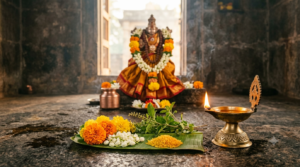
To chant the Raghavendra Ashtottara Shatanamavali, sit before an image or the Brindavana of Rayaru, light a lamp, and calm your mind for a moment. Take a short sankalpa, then recite each name with “Om” at the start and “namah” at the close. If someone is doing archana, they offer a flower or a pinch of akshata at every name.
Because the hymn is short, most devotees finish it in about ten minutes. You can chant it once, or three or nine times when you have more time. Many families do it after their morning bath, while others prefer the evening lamp-lighting. Consistency matters far more than a perfect accent, so start small and keep going.
- Bathe and sit in a clean, quiet spot facing your Rayaru photo or Brindavana.
- Light a lamp and, if you wish, an incense stick.
- Offer a short prayer and take your sankalpa for the day.
- Recite all 108 names slowly, following the “Om … namah” pattern.
- Offer flowers or akshata during archana, then close with a namaskara.
Why Devotees Recite the Raghavendra Ashtottara Shatanamavali
Devotees recite the Raghavendra Ashtottara Shatanamavali to feel closer to Rayaru and to seek his grace in daily life. The closing verse of the hymn promises well-being to those who chant it with faith on an auspicious day. Because each name recalls a virtue or a kindness of the saint, the recitation slowly steadies the mind and lifts the heart.
Many names speak of relief from illness, fear, debt, planetary trouble and family worries. These are expressions of faith and centuries-old tradition, and devotees hold them dear. They are not, however, a replacement for medical care or professional advice, so please treat any serious health or legal matter with proper help alongside your prayers.
What Many Guides Get Wrong
The single most common mix-up is treating the Ashtottara as the same text as the Raghavendra Stotra. They are different. The stotra begins “Sri Poornabodha Tirthesha” and flows in verse, while the Ashtottara Shatanamavali is a list of 108 separate names, each ending in “namah”. Both were given to us by Appanacharya, yet they serve different moods of worship.
A second point is spelling. Because the names of the Raghavendra Ashtottara Shatanamavali travel across Kannada, Telugu, Tamil and Devanagari scripts, transliteration shifts from one book to another. Such differences do not make a version wrong. You also do not need to be a Sanskrit scholar, since sincere chanting with a little understanding of the meaning is what devotees have always valued.
Finally, remember that the hymn itself asks for nothing but devotion. No genuine chanting requires a payment to any website or agent. If a site asks for money to “unlock” the names or promises guaranteed results for a fee, treat it as a warning sign, and read about the real miracles of Rayaru from trusted devotional sources instead.
Insider Tips for Everyday Chanting
Keep a clean printed copy near your pooja shelf so you never hunt for the words. If memorising feels hard, learn the names in small groups of about eighteen, matching the sections above. Thursday is especially dear to Rayaru, so a weekly Thursday sankalpa builds a gentle rhythm.
During the annual Raghavendra Swamy Aradhana, chanting the 108 names carries special meaning, and many devotees combine it with a trip to Mantralaya. When you visit, you can offer your recitation before the Brindavana itself. For sevas and rooms, book only through the official portal at srsmatha.org/online to stay safe from fake booking sites.
Before You Begin
The Raghavendra Ashtottara Shatanamavali is one of the simplest and most loving ways to keep Rayaru in your daily life. You need only a lamp, a quiet corner and a sincere heart. Start with a single round on Thursday, add the meanings slowly, and let the practice grow at its own pace. Over time, these 108 names become old friends who greet you every morning.
Frequently Asked Questions
What is the Raghavendra Ashtottara Shatanamavali?
It is a devotional hymn of 108 names of Sri Raghavendra Swamy, each chanted as “Om … namah”. Every name praises a quality, deed or scholarly work of the saint. Devotees recite it as a daily salutation to Rayaru.
Who composed the 108 names of Raghavendra Swamy?
Sri Appanacharya, a close disciple of Rayaru, composed the hymn. He also wrote the well-known Raghavendra Stotra. His nearness to the saint gives the names their warmth and authority.
How many names does the Ashtottara Shatanamavali contain?
It contains exactly 108 names, which is what “ashtottara shata” (one hundred and eight) means. The number 108 is considered highly auspicious across Hindu worship. Many namavalis of gods and saints follow the same count.
On which day should I chant the Raghavendra Ashtottara Shatanamavali?
You can chant it on any day, though Thursday is especially dear to Rayaru. The annual Aradhana period is another powerful time. Daily practice, even once, is more valuable than occasional long sessions.
Is the Ashtottara Shatanamavali the same as the Raghavendra Stotra?
No, they are two different texts. The Raghavendra Stotra is a flowing verse hymn beginning “Sri Poornabodha Tirthesha”. The Ashtottara Shatanamavali is a list of 108 individual names, each ending in “namah”.
Can I chant it if I do not know Sanskrit?
Yes, absolutely. Sincere recitation matters far more than a flawless accent. You can chant the names as written in your own script and reflect on the meanings in your mother tongue.
What are the benefits of chanting the Raghavendra Ashtottara Shatanamavali?
Devotees believe regular chanting brings peace of mind, protection and Rayaru’s grace, as the hymn’s closing verse suggests. These are matters of faith and tradition rather than guaranteed outcomes. For serious health, legal or financial concerns, seek qualified help alongside your prayers.
Where can I do official seva or darshan of Rayaru?
Rayaru’s Brindavana is at Mantralaya, on the bank of the Tungabhadra river in Andhra Pradesh. For official darshan timings, sevas, rooms and donations, use only the official Matha portal at srsmatha.org. Avoid look-alike sites and private agents who ask for payment.