Raghavendra Swamy home pooja can be a simple, optional household practice rather than a fixed ritual with one compulsory weekday or mantra count. For example, a clean place, a respectful image of Sri Raghavendra Tirtha, and a short prayer are enough for many devotees. If your family follows a Madhwa sampradaya routine, keep that family practice and use this guide as a simple framework rather than a replacement for an acharya’s advice.
Independence note: srsmatha.org.in is an independent devotional guide. It is not the official website of Sri Raghavendra Swamy Matha, Mantralayam, and it does not accept seva bookings, room reservations, donations, or payments. For official Matha services and announcements, use srsmatha.org.
Raghavendra Swamy Home Pooja at a Glance
- Nature: personal devotional worship at home; it is not the same as a formal vrata or a Matha seva.
- Day: choose any day that suits your household. Some families favour Thursday, but it is a custom rather than a rule this guide can source as compulsory.
- Time: morning or evening both work for a personal routine, because consistency matters more than a clock time.
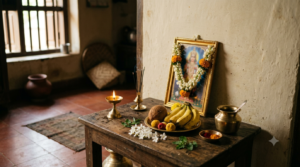
- Basic setup: a clean place, Rayaru’s photo, and a lamp if it is safe to light one.
- Prayer: “Om Sri Raghavendraya Namah” appears in the traditional Raghavendra Stotra text.
- Longer reading: devotees may recite Sri Appannacharya’s Raghavendra Stotra when time and pronunciation permit.
- Offerings: flowers, tulsi, fruit, water, or a simple home-made naivedya are optional household offerings.
- Counts: no fixed daily repetition count is imposed in this guide. Use a count only if it comes from your own family or teacher’s practice.
What Does Raghavendra Swamy Home Pooja Mean?
Raghavendra Swamy home pooja means personal worship of Sri Raghavendra Tirtha in your own home. It can be as brief as lighting a lamp, offering namaskara, and remembering the Guru with a short mantra. It can also include a stotra, flowers, naivedya, or a longer family sequence when those practices already belong to your household tradition.
The key distinction is between ordinary household devotion and a formal sankalpa or vrata. A daily or occasional prayer need not borrow fasting rules, fixed day counts, pradakshina counts, or other disciplines from a separate vow. If you are planning a multi-day observance, see the separate Raghavendra Swamy vratam guide and confirm family-specific rules with a knowledgeable elder or acharya.
Who Is Sri Raghavendra Tirtha?
Sri Raghavendra Tirtha is a major saint and scholar in the Dvaita Vedanta tradition. The official Sri Raghavendra Swamy Matha life history records that he was born as Venkatanatha in 1595 and studied under Sri Sudheendra Tirtha. The same biography records his sanyasa initiation in 1621, when he received the name Sri Raghavendra Tirtha.
The official Matha account also places his Brindavana entry in 1671 on Shravana Krishna Paksha Dwitiya. It identifies Sri Appannacharya as a beloved disciple and links him with the famous Raghavendra Stotra. For a fuller narrative, our Sri Raghavendra Swamy life history brings those biographical points together for general readers.
These details matter in a home-worship guide because they separate documented tradition from internet habit. The biography gives a tithi for the Brindavana event, but it does not provide a household rule saying personal worship must happen only on one weekday.
A Simple Raghavendra Swamy Home Pooja Routine
A simple Raghavendra Swamy home pooja works best when each step has a clear purpose and nothing feels compulsory merely because another website lists it. So the routine below is intentionally light. Add family customs only when you already know their meaning or have guidance for them.
1. Prepare a clean, quiet place
Choose a clean shelf, pooja platform, or small altar where Rayaru’s image can remain undisturbed. Wipe the area and sit comfortably before you begin. You also do not need a new mandir, special furniture, or a costly setup for a personal prayer routine.
If you are creating a permanent space, our Rayaru mandir at home guide covers practical placement and upkeep. Keep the arrangement safe, especially around lamps, curtains, children, and pets.
2. Place Rayaru’s image respectfully
A framed photo is enough for simple household devotion, so an idol is not required. Place the image on a clean raised surface if that is convenient. Avoid turning direction rules into a source of anxiety unless your own family tradition has a specific practice.
You may also keep the image alongside the deities already worshipped in your home.
3. Light a lamp if it is safe
Many devotees begin with a small oil or ghee lamp because light naturally marks the start of prayer. Incense is optional, especially in homes with asthma, allergies, babies, or poor ventilation. If an open flame is unsafe, you can simply sit for prayer without one.
Then take a few quiet moments to settle the mind. A short namaskara offered with attention is more useful than rushing through a long list of items.
4. Use a short, source-backed prayer
The Sanskrit Raghavendra Stotra includes the salutation “Om Sri Raghavendraya Namah.” You can see the text in the Sanskrit Documents edition of Sri Raghavendra Stotram, which identifies Sri Appannacharya as the author.
Say the mantra once, several times, or according to a count already taught in your family. This guide does not prescribe 11, 21, or 108 repetitions as a mandatory daily rule because the cited text does not establish one universal household count.
5. Add the Raghavendra Stotra if you wish
If you know the longer hymn, recite as much as you can with attention. The official Matha biography describes Sri Appannacharya composing the Raghavendra Stotra while hurrying toward Manchale as Rayaru entered Brindavana. The devotional text tradition also preserves the hymn under Appannacharya’s name.
Beginners do not need to race through Sanskrit they cannot yet follow. Read from a reliable text, learn pronunciation gradually, or listen while following the words. Our guide to the Poojyaya Raghavendraya prayer explains the short salutation and its meaning separately.
6. Offer flowers or naivedya only if practical
You can also offer fresh flowers, tulsi, fruit, water, or a small home-made sweet as a sign of devotion. None of these needs to be expensive.
After the prayer, consume edible naivedya respectfully as prasada within your family practice. Do not leave perishable food sitting for long periods, especially in hot weather.
7. Close with namaskara and a quiet minute
End with a simple bow or namaskara and sit quietly for a moment. You can offer gratitude, ask for clarity, or remember the people you are praying for. Devotional practice is not a transaction, so avoid treating a particular result, dream, or sign as proof that the pooja succeeded.
When the routine stays small, it is easier to continue without fear of missing a rule. That steady quality is more valuable than adding steps you cannot source or sustain.
Which Prayers Suit Raghavendra Swamy Home Pooja?
Three prayer choices cover most beginners without forcing a long ritual. Use one of them, combine them, or keep only the one your family already knows.
| Prayer | Best for | Source note |
|---|---|---|
| Om Sri Raghavendraya Namah. | Short daily remembrance. | Appears in the traditional Raghavendra Stotra text. |
| Poojyaya Raghavendraya salutation. | Brief praise and namaskara. | Preserved in short Raghavendra stotra traditions. |
| Sri Raghavendra Stotra. | Longer parayana. | Attributed to Sri Appannacharya in devotional-text sources and the Matha tradition. |
The Laghu Raghavendra Stotra text preserves the familiar Poojyaya salutation. Meanwhile, the longer Sanskrit Documents text includes “Om Sri Raghavendraya Namah” and attributes the hymn to Appannacharya. The official Matha biography independently connects Appannacharya with the stotra, so the devotional-text attribution is not resting on one modern blog.
Is Thursday Required for Raghavendra Swamy Home Pooja?
No cited source used for this refresh establishes Thursday as the only valid day for Raghavendra Swamy household worship. Some families may prefer Thursday as a guru-related custom, and there is no reason to reject a sincere family practice. The problem begins only when an optional custom is presented as a universal rule.
The official Sri Raghavendra Swamy Matha biography records the Brindavana entry by the traditional tithi, Shravana Krishna Paksha Dwitiya, in 1671. This refreshed guide therefore does not build a weekday rule from that event. If Thursday is convenient for your family, use it. If another day works better, personal prayer can still remain meaningful and regular.
How Many Times Should You Chant the Mantra?
For an ordinary home routine, use the count your family or teacher has taught you, or chant without turning counting into a burden. The Raghavendra Stotra does contain a reference to 108 recitations in a specific devotional context connected with eclipse or Pushya-related observance. That does not automatically create a universal daily requirement for every home pooja.
This is why the refresh removes fixed “3, 11, 21, or 108” instructions from the basic routine. Counts can be meaningful within japa practice, but a count should have a source and context. Beginners are better served by correct text, attention, and consistency than by a number copied from an unrelated observance.
What Is Optional, and What Is Actually Necessary?
For personal Raghavendra Swamy home pooja, the essential part is devotional attention rather than equipment. A clean place and a respectful prayer are enough to begin. Everything else can support the practice, but it should not become a test of whether you are “allowed” to worship.
| Item or practice | For simple home worship | How to treat it |
|---|---|---|
| Rayaru photo. | Useful. | A simple visual focus; no elaborate shrine required. |
| Lamp. | Optional. | Use only when safe. |
| Flowers or tulsi. | Optional. | Offer what is available. |
| Naivedya. | Optional. | Fruit or simple home food is enough. |
| Fixed weekday. | Not required here. | Follow family custom if you have one. |
| Fixed mantra count. | Not required here. | Use a taught count, not an arbitrary internet rule. |
| Fasting. | Not part of this basic routine. | Keep separate from ordinary household prayer. |
| Priest. | Not needed for simple personal prayer. | Consult an acharya for formal or family-specific rites. |
Common Mistakes in Raghavendra Swamy Home Pooja Guides
- Turning a custom into a command: a day or count may belong to one family practice without becoming a rule for everyone.
- Mixing pooja and vratam: fasting, multi-day sankalpa, and strict disciplines belong to a different level of observance.
- Using unsourced mantra lists: start with a text you can trace to a devotional source instead of collecting many internet mantras.
- Making beginners anxious about direction: a clean and respectful space matters more than forcing a placement rule you cannot verify.
- Promising guaranteed results: devotees may hold strong beliefs about Rayaru’s grace, but worship is not a guaranteed cure, financial remedy, or transaction.
- Sending readers to unofficial booking pages: Use authorised Matha channels; rooms can be booked through the official website or in person at the CRO.
Home Pooja, Vratam, and Matha Seva Are Different
These three practices often get mixed together online, but the difference is practical. Home pooja is personal worship. A vratam adds a stated vow and may include extra discipline. A Matha seva is an institutional offering handled by the Matha under its own procedures.
Keeping those categories separate protects devotees from unnecessary rules and from payment scams. For official sevas, donations, or announcements, visit the Sri Raghavendra Swamy Matha website. For accommodation, use the official Matha accommodation page or visit its authorised Central Reception Office (CRO) in Mantralaya. This independent guide does not receive money or process any service.
Faith, Health, and Practical Safety
Raghavendra devotion belongs to faith and tradition, so personal stories of grace should be understood in that devotional setting. Do not use a mantra, vrata, or pooja as a substitute for medical care, mental-health treatment, or financial advice. If you are unwell, continue appropriate professional care while keeping prayer as spiritual support.
Fasting is not required for the simple routine in this article. If you separately undertake a fast or longer vrata, adjust it for pregnancy, diabetes, medicines, age, or illness and seek medical advice when needed. No devotional discipline should require you to ignore clear health risks.
Raghavendra Swamy Home Pooja: A Simple Way to Begin
Raghavendra Swamy home pooja does not need to start with a long checklist. Clean the space, place Rayaru’s image respectfully, light a lamp if safe, and recite a short source-backed prayer. Add flowers, naivedya, or the full stotra only when they help your devotion rather than create pressure.
Most importantly, keep optional customs labelled as optional in any Raghavendra Swamy home pooja. A weekday preference, a mantra count, or a family-specific sequence can be meaningful without being mandatory for every devotee. For biography, use the official Matha life history; for prayer wording, use established devotional-text sources rather than copied social posts.
Frequently Asked Questions
Can I do Raghavendra Swamy home pooja every day?
Yes. A simple personal prayer can be kept daily if that suits your household. This guide does not limit worship to Thursday, because the cited sources do not establish one compulsory weekday for ordinary home devotion.
Is Thursday compulsory for Raghavendra Swamy pooja?
No. Some devotees and families may prefer Thursday as a guru-related custom, but this refresh does not present it as a universal rule. Follow your family tradition if you have one, or choose a day you can sustain calmly.
What is the simplest mantra for Rayaru?
“Om Sri Raghavendraya Namah” is a simple source-backed choice. It appears in the traditional Sanskrit Raghavendra Stotra text, so beginners can use it without depending on an unsourced list of internet mantras.
Do I have to chant 108 times?
No fixed daily count is required by this guide. The stotra includes 108 recitations in a particular devotional context, but that is not the same as a universal daily home-pooja rule. Use a taught family count if you have one, or pray without anxiety about numbers.
Can I worship with only a photo of Raghavendra Swamy?
Yes. A clean framed photo is enough for a simple personal routine. An idol, special cabinet, silver items, or elaborate altar are optional and should not become barriers to prayer.
What can I offer as naivedya?
Fruit, water, jaggery, or a simple home-made preparation can be offered if you wish. Keep the offering modest and suitable for your household, then consume edible naivedya respectfully as prasada according to family practice.
Do I need a priest for Raghavendra Swamy home pooja?
Not for the simple personal prayer routine described here. If you want a formal ritual, a sankalpa vratam, or a sampradaya-specific procedure, ask a qualified acharya or follow the practice already taught in your family.
Can I fast as part of the pooja?
Fasting is not required for the basic home routine in this article. If you choose a separate vrata that includes fasting, keep health needs first and follow reliable guidance rather than copying strict rules from a general home-pooja page.
Where should I book a Mantralaya seva or room?
For room bookings, use the official Matha accommodation page or its authorised Central Reception Office (CRO) in Mantralaya. For official sevas, visit srsmatha.org. This site is an independent guide and does not accept bookings, payments, donations, or personal details for Matha services.