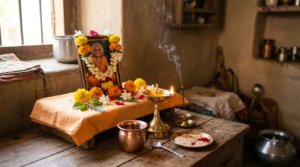
A Raghavendra Swamy home pooja is far simpler than most guides make it sound. You do not need a priest, a long ritual, or costly materials to begin. A clean corner, a lamp, a picture of Rayaru, and a sincere heart are genuinely enough. This guide walks you through the Thursday worship step by step, so even a first-timer can start today with quiet confidence.
Please note: srsmatha.org.in is an independent devotional guide for the benefit of Rayaru’s devotees. We are not the official Sri Raghavendra Swamy Mutt, and we are not affiliated with or endorsed by it. We do not take bookings, sevas, donations, or payments of any kind. For seva bookings, room reservations, and e-hundi, always use the official Mutt website, srsmatha.org.
Raghavendra Swamy Home Pooja: Quick Summary
Here is everything a Raghavendra Swamy home pooja needs, at a glance, so you can gather your things before Thursday morning.
- Best day: Thursday (Guruvara), because Rayaru entered Brindavana on a Thursday.
- Core items: a photo or small idol of Rayaru, a lamp, incense, flowers, and a simple naivedya.
- Main mantra: the ashtakshara, “Om Sri Raghavendraya Namaha”.
- Key text: the Sri Raghavendra Stotra, composed by his disciple Appannacharya.
- The spirit: sincerity matters more than scale, so keep it clean, calm, and heartfelt.
- Time needed: a simple weekly pooja takes 15 to 20 minutes.
Who Is Sri Raghavendra Swamy?
Sri Raghavendra Swamy, lovingly called Rayaru, was a saint of the Madhwa (Dvaita) tradition founded by Sri Madhvacharya. He lived across the 16th and 17th centuries, and devotees revere him as a living guru even now. They describe him as Kalpavruksha and Kamadhenu, the wish-granting tree and the divine cow of tradition.
He was born in 1595 at Bhuvanagiri, in present-day Tamil Nadu, as Venkatanatha. A brilliant scholar of the Vedas and music, he took sanyasa in 1621 and became Raghavendra Tirtha. In 1671, on the banks of the Tungabhadra at Mantralaya, he entered Brindavana alive in deep meditation. Because this Jeeva Samadhi is remembered as a living presence rather than a death, pilgrims still travel to Mantralaya to seek his grace.
If you want the fuller story, our life history of Sri Raghavendra Swamy covers his early years, works, and legacy in depth.
Why Is Thursday Special for Rayaru?
Thursday, known as Guruvara, is the most auspicious day to worship Rayaru because it is the day of the guru in Hindu tradition. It carries added weight for his devotees, since Sri Raghavendra Swamy entered Brindavana on a Thursday in 1671. That connection is why so many families light a lamp for him every Guruvara.
Thursdays are broadly linked to gurus and teachers, so saints like Rayaru are especially honoured then. Temples decorate his Brindavana more elaborately on this day, while homes keep the observance quiet and simple. You do not have to wait for a festival, because a weekly Thursday is enough to build a steady bond with Rayaru.
What You Need for Raghavendra Swamy Home Pooja
Gathering the right items before you sit down keeps the pooja calm and unbroken. Nothing a Raghavendra Swamy home pooja needs is expensive, and most homes already have the basics. If something is missing, do not stress, because Rayaru’s tradition values sincerity over show.
Essential items
- A framed photo or a small idol (vigraha) of Sri Raghavendra Swamy.
- A wooden plank, low stool, or clean cloth (mane) to place the image on.
- A lamp (deepa) with ghee or oil, plus cotton wicks.
- Incense sticks or dhoop, and a matchbox or lighter.
- Fresh flowers, ideally tulsi and any fragrant blooms.
- Kumkum, turmeric, and akshata (rice mixed with a little turmeric).
Offerings and extras
- A naivedya such as fruit, jaggery, or a simple sweet.
- A small copper or silver cup of clean water for tirtha.
- A printed or digital copy of the Sri Raghavendra Stotra.
- A bell, if you have one, to mark the aarti.
Keep a coconut aside if you plan a longer sankalpa seva, since many devotees offer one at the close.
How to Do Raghavendra Swamy Home Pooja Step by Step
This is the heart of the Raghavendra Swamy home pooja, laid out as a simple Thursday routine. Move through the steps calmly, and do not rush any of them. The whole sequence takes only 15 to 20 minutes once you are used to it.
Prepare the space and image
- Bathe and clean the space. Take a bath first, then wipe the pooja area clean. A settled, tidy corner helps the mind settle too.
- Set up the image. Place Rayaru’s photo or idol on the mane, facing east or west if you can. Keep Lord Ganesha nearby, because Hindu poojas traditionally begin by remembering him.
- Light the lamp and incense. Light the ghee lamp first, then the incense. Sit facing the image, ideally on a clean mat.
- Begin with Ganesha. Offer a short prayer to Ganesha for a smooth pooja, then turn your full attention to Rayaru.
- Apply and offer kumkum. Dab kumkum and akshata on the frame or idol base, while quietly recalling why you have come to him.
Chant, circle, and complete the pooja
- Offer flowers. Place flowers at his feet one by one, and chant “Om Sri Raghavendraya Namaha” as you do.
- Chant the mantra and stotra. Recite the ashtakshara mantra a few times, then read the Sri Raghavendra Stotra if you have it. Even one sincere round counts.
- Do pradakshina. If space allows, circle the image or your seat gently while chanting his name. Ladies may simply do namaskara instead.
- Offer naivedya. Place the fruit or sweet before Rayaru, and offer the water as tirtha. Ring the bell softly if you have one.
- Do the mangalarati. Wave the lamp gently before the image, then bow in namaskara. Finally, take the tirtha and share the naivedya with your family.
That is the complete weekly pooja. Because it is short and repeatable, most families find it easy to keep up every Guruvara.
The Mantra and Stotra for Raghavendra Swamy Home Pooja
The simplest and most powerful chant is the ashtakshara, or eight-syllable mantra: “Om Sri Raghavendraya Namaha.” Repeat it as often as you like, either on a tulsi mala or silently. It suits anyone, because it needs no special training.
Many devotees also recite the dhyana shloka before the pooja. The well-loved verse runs: “Poojyaya Raghavendraya Satya Dharma Ratayacha, Bhajatam Kalpavrukshaya Namatam Kamadhenave.” It salutes Rayaru as the wish-granting tree for those who bow to him.
The Sri Raghavendra Stotra, a set of verses by his disciple Appannacharya, is the classic Thursday text. Tradition holds that Appannacharya completed it at the very moment of Rayaru’s samadhi. If you cannot read it yet, you can play a recording softly and follow along, since listening with attention is also worship.
A gentle tip: many families keep a small silver cup of water covered by the right palm while reciting the stotra, then share that water as tirtha afterwards.
Raghavendra Swamy Home Pooja vs Multi-Day Seva
A weekly Raghavendra Swamy home pooja and an intensive multi-day seva are not the same thing, though many pages online blur them together. Knowing the difference saves you real confusion. It also stops beginners from taking on rules they do not actually need.
The simple weekly pooja described above is light and sustainable. You do it on Thursday morning or evening, and then carry on with your day. There is no fasting requirement, no floor-sleeping, and no elaborate sankalpa.
A sankalpa seva is a stricter vratam some devotees undertake for a specific wish, often over 3, 5, 7, or 11 days. During those days people may fast, sleep on the floor, and keep silence to deepen focus. This is a personal, optional discipline, so never feel pressured into it. If you do choose a longer seva, keep it within your physical limits and adjust it to your health.
Raghavendra Swamy Home Pooja Mistakes to Avoid
A few small missteps trip up newcomers, and all of them are easy to avoid. Getting these right keeps your worship both correct and stress-free.
- Overcomplicating it. A Raghavendra Swamy home pooja is meant to be simple, so a clean lamp and honest prayer beat a crowded, anxious ritual.
- Treating it as a transaction. Worship is surrender and gratitude, not a deal for guaranteed results. Devotees describe his grace as a matter of faith, not a promise on demand.
- Confusing weekly pooja with a strict vratam. As explained above, the everyday Thursday pooja needs no fasting or floor-sleeping.
- Chasing “dream signs”. Some online posts promise a dream if the seva “works”. Treat such claims as folklore, because sincerity is the real point.
- Booking sevas through unofficial links. This one matters for your money, so see the warning below before you pay anyone.
Faith, Fasting, and a Word on Safety
The blessings devotees associate with this pooja belong to the world of faith and tradition. Stories of healing and rescued fortunes are cherished across the Madhwa community, yet they are shared as devotion, not as medical or financial guarantees. Please hold them in that spirit.
Never treat any ritual or remedy as a substitute for medical treatment. If you or a family member is unwell, see a qualified doctor, because faith and medicine can walk together. This is especially important for serious or ongoing conditions.
Fasting is optional and only relevant to longer sankalpa sevas. If you are diabetic, pregnant, elderly, or on regular medication, adjust or skip the fast and consult your doctor first. Rayaru’s grace does not depend on pushing your body past its limits.
Booking Sevas at Mantralaya: Use the Official Portal Only
If you want to book a seva, a room, or offer a donation at Mantralaya, do it only through the official Sri Raghavendra Swamy Mutt website, srsmatha.org. That is the single trusted channel for reservations and e-hundi. This home guide takes no bookings and handles no money.
Be cautious online, because fake portals and agents sometimes copy official-looking names to collect payments. A genuine booking always happens on the Mutt’s own site, so avoid any page demanding an upfront “processing fee” to a private account. When in doubt, go straight to the official portal and confirm details there.
For festival timing, our guide to the Raghavendra Swamy Aradhana 2026 dates explains the three-day schedule and crowd tips. You can also read cherished accounts in our collection of Rayaru’s miracles.
Before You Begin
A Raghavendra Swamy home pooja asks very little and gives a great deal of calm. Start with a clean corner, a lamp, his image, and the ashtakshara mantra on a Thursday. Keep it simple, keep it sincere, and let it become a steady weekly habit. For anything official at Mantralaya, use srsmatha.org, and let this guide simply help you worship at home with a settled heart.
Frequently Asked Questions
Can I do Raghavendra Swamy home pooja without a priest?
Yes, you can perform this Raghavendra Swamy home pooja on your own. Rayaru’s tradition is simple and welcoming, so a clean space, a lamp, his image, and the ashtakshara mantra are enough. A priest is not required for a personal Thursday pooja.
Which day is best for Raghavendra Swamy home pooja?
Thursday, called Guruvara, is the best day to worship Rayaru. He entered Brindavana on a Thursday in 1671, which is why the day is sacred to him. You may still pray on other days, though Thursday carries special meaning.
What mantra should I chant during the pooja?
The main mantra is “Om Sri Raghavendraya Namaha”, the eight-syllable ashtakshara. Chant it a few times or on a mala. Many devotees also recite the Sri Raghavendra Stotra by Appannacharya.
Do I need to fast for the pooja?
No, a simple weekly Thursday pooja does not require fasting. Fasting is only part of longer sankalpa sevas that some devotees choose. If you do fast, keep it within your health limits and consult a doctor if you have any medical condition.
Can women do the pooja during menstruation?
Traditional practice varies from family to family on this question. Many households follow their own customs, so it is best to do what feels right within your tradition. Rayaru’s grace is understood to rest on sincerity and devotion above all.
What naivedya should I offer in a Raghavendra Swamy home pooja?
A simple offering works best, such as fruit, jaggery, or a home-made sweet. After the pooja, share the naivedya with your family as prasada. There is no need for anything elaborate or expensive.
How do I book a seva or room at Mantralaya?
Book only through the official Sri Raghavendra Swamy Mutt website, srsmatha.org. It is the trusted channel for sevas, room reservations, and e-hundi. Avoid unofficial pages or agents that ask for advance payments to private accounts.
Is a photo enough, or do I need an idol?
A framed photo of Rayaru is perfectly enough to begin. An idol is optional and not required for home worship. What matters most is a clean space and a sincere mind.