The Raghavendra Swamy vratam procedure is often described online as a fixed set of days, pradakshinas and fasting rules. Yet those rules need a clear source before anyone treats them as compulsory. This guide also explains a simple home observance and separates household custom from documented devotional texts.
Independence notice: srsmatha.org.in is an independent devotional guide, not the official website of Sri Raghavendra Swamy Matha, Mantralayam. We are not affiliated with the Matha and accept no bookings, sevas, donations or payments. For official information, visit srsmatha.org.
Raghavendra Swamy Vratam Procedure at a Glance
- Purpose: A personal devotional observance centred on Sri Raghavendra Tirtha, also called Rayaru.
- Source status: The step-by-step home sequence below is an illustrative family-style practice, not a verified Matha-issued vratam rulebook.
- Day and length: Some families favour Thursday or a multi-day vow. No single compulsory duration was established by the sources reviewed for this guide.
- Prayer: Devotees may use the familiar Poojyaya Raghavendraya salutation or a Raghavendra stotra.
- Counts: Do not treat 11 or 108 pradakshinas as a universal minimum without a source from your tradition.
- Food and rest: Fasting and sleeping arrangements depend on family practice and personal health; neither should cause harm.
- When unsure: Follow a trusted elder or acharya for a formal family vow, or keep a simple personal prayer instead.
What Is the Raghavendra Swamy Vratam?
A vratam, or vrata, is a devotional observance undertaken with a personal intention, often after a private sankalpa. In the Raghavendra tradition, a household may mark that intention through prayer, stotra recitation, offerings and a chosen routine. The exact form can differ, so a home example should not be mistaken for a rule binding every devotee.
Daily worship, a family vow and a Matha seva are not interchangeable. Daily prayer can also be short and open-ended. A family vow may carry customs taught across generations, while an institutional seva follows the procedures of the Matha concerned. For the simpler option, see our Raghavendra Swamy home pooja guide.
Where Does the Raghavendra Swamy Vratam Procedure Come From?
No Matha-published source establishing the full twelve-step household sequence, exact day counts or fasting schedule was identified in the official pages reviewed. The official Matha life history documents Rayaru’s life and the place of Sri Appannacharya in the devotional tradition. However, biography and stotra history do not by themselves prescribe a universal household vrata.
The Laghu Raghavendra Stotra text preserves the familiar Poojyaya salutation. The longer Raghavendra Stotram provides another devotional text. Neither link is evidence that every devotee must walk a set number of rounds, sleep on the floor or fast for a fixed period.
Source distinction: The prayer text has a traceable textual source; the household sequence that follows is a practical example. It is not presented as an instruction issued or endorsed by Sri Raghavendra Swamy Matha, because no such instruction was established. If your family follows a particular Madhwa sampradaya, ask its acharya before changing an inherited observance.
Raghavendra Swamy Vratam Procedure at Home: An Example
The following Raghavendra Swamy vratam procedure is a flexible example for someone seeking a respectful home routine. It retains the familiar altar, prayer and offering steps from the earlier guide. However, it removes claims that every household must follow the same order, number or time of day.
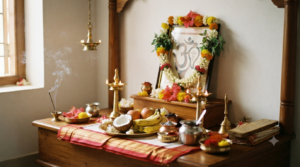
- Prepare a clean place. Wipe a shelf, wooden mane or pooja platform. Use a rangoli or kolam if that is part of your household practice.
- Place Rayaru’s image. Keep a framed image on a safe surface. Some homes also place an image of Ganesha or their family deity nearby.
- Arrange simple offerings. Flowers, fruit or water can serve as modest offerings. A coconut, betel leaves and other items remain optional unless your family practice calls for them.
- Light a lamp only when safe. An oil or ghee lamp may mark the start of worship. Skip the flame and incense if ventilation or household safety makes them unsuitable.
- State your intention. In your own words, offer a short sankalpa, or statement of intent. You need not promise a duration that you cannot safely keep.
- Recite a familiar prayer. Say the Poojyaya Raghavendraya salutation or read a Raghavendra stotra. Follow a teacher’s wording when your family has one.
- Offer namaskara. Bow respectfully. Some families also perform pradakshina, or a circular walk, where space and mobility allow.
- Close the worship. Sit quietly, offer thanks and share suitable edible offerings as prasada. Clear perishable food before it spoils.
Which steps are optional?
This outline shows how a household might organise the observance if it has no inherited sequence. However, the example does not establish a compulsory puja manual. A priest or elder can explain any extra sankalpa, naivedya or concluding rites that belong to your particular family tradition.
Morning and evening rhythm
Some devotees pray after bathing in the morning and return for a shorter prayer in the evening. Others have work, care or health duties, so they choose a manageable time. A morning-and-evening schedule can be meaningful, although it is not a universal requirement shown by the cited sources.
Likewise, clean clothing and a tidy altar support a respectful routine without demanding a special purchase. Where a family follows madi or other specific observances, its elders can explain the local meaning. Avoid treating another household’s clothing rules as instructions for everyone.
How Many Days Should the Vratam Last?
There is no verified universal requirement in the sources reviewed that a Raghavendra Swamy home vratam must run for three, five, seven, nine or eleven days. Those figures may appear in family accounts, but they should not become a published rule merely through repetition. A short prayer or a longer personal observance depends on the devotee’s tradition and circumstances. Therefore, the Raghavendra Swamy vratam procedure should not be sold as one compulsory schedule.
For a formal vow, choose its terms with your family’s knowledgeable elder or acharya. For informal home devotion, you can simply pray on a day that suits you. Also, do not infer that a longer duration has greater spiritual value or that a shorter one is invalid.
Is Thursday necessary?
Thursday, or Guruvara, is a familiar choice in some households that honour Rayaru as their guru. Still, the reviewed official material does not prescribe Thursday as the only permissible starting day for every home vratam. When a particular weekday matters to your family’s observance, follow that local guidance rather than a blanket online claim.
Raghavendra Swamy Vratam Procedure: Pradakshina and Chanting Counts
Neither an 11-round minimum nor a 108-round requirement could be established as a rule for all households from the sources used here. Pradakshina means walking respectfully around a sacred focus, usually in a clockwise direction where the space permits. If your family has a taught count, you may follow it without claiming other counts are wrong.
For example, the familiar short salutation reads: “Poojyaya Raghavendraya Satya Dharma Rataya Cha, Bhajatam Kalpavrikshaya Namatam Kamadhenave.” It is a devotional expression of reverence, not a promise that a stated number of repetitions produces a guaranteed outcome.
For more context, also read our Poojyaya Raghavendraya prayer guide. Readers who prefer longer recitation may consult the cited stotra text and seek help with pronunciation. If walking is difficult, ask a trusted teacher about an appropriate form of seated worship.
Raghavendra Swamy Vratam Procedure: Fasting and Rest
The earlier version prescribed a morning meal, no dinner and a fruit-and-milk fallback. It also instructed devotees to sleep on the floor. Those details may reflect some households, but the material reviewed does not support them as universal requirements of the Raghavendra Swamy vratam procedure.
Never skip meals or change your medication schedule merely to meet an online ritual checklist. People with diabetes, pregnancy, frailty, eating disorders or other medical concerns should avoid restrictive fasting without individual clinical advice. Children and anyone recovering from illness also need suitable food and rest.
A safer devotional choice may be modest meals, prayer, charity or a reduction in distractions, according to personal practice. If your family has a specific fast, discuss a suitable adjustment with both a healthcare professional and a knowledgeable religious guide. Likewise, worship should never replace medical care.
What You Need Before Day One
- Useful basics: A clean surface and a framed image of Sri Raghavendra Swamy.
- Optional offerings: Fresh flowers, water, fruit or a small home-made naivedya.
- Optional worship items: A lamp, oil or ghee, incense, sandal paste and a coconut.
- Prayer reference: A reliable printed text or the linked Raghavendra stotra.
- Practical preparation: Space to sit, a safe place for a flame and enough time to pray without rushing.
You also do not need an elaborate shopping list for this Raghavendra Swamy vratam procedure. If an item is part of your family’s traditional sequence, use it as instructed there. Otherwise, simple worship avoids both needless expense and the fear that a missing coconut or second lamp makes devotion invalid.
Raghavendra Swamy Vratam Procedure When Plans Change
Illness, travel and family needs can sometimes interrupt an observance. No source reviewed here supports a universal rule that a missed session causes spiritual harm, automatically cancels every vow or forces everyone to restart. A formal family sankalpa may have its own guidance, so ask the person who taught you that practice.
If you miss a day or fall ill
Protect your health first. You may continue with a short prayer when able, or speak with your family elder about how to mark an interruption. Do not press through fever, dizziness or exhaustion merely to preserve a count. A fresh beginning may be an option in some households, but it is not an order for every devotee.
If the coconut spoils or a lamp goes out
Replace spoiled food when needed rather than keeping it on the altar for symbolic reasons. If a flame goes out, check the wick and surroundings before considering relighting it. Such everyday events do not establish an omen, and they do not prove that a vow has failed. Follow family advice if your observance gives an item a special meaning.
If menstruation or other circumstances affect worship
Households have different customs, so avoid presenting a pause, restart or transfer of worship as mandatory for all women. You may seek guidance from someone you trust within your tradition. Do not turn an individual household’s rule into a judgment about another devotee’s sincerity.
If there is no dream or visible result
Devotees sometimes share accounts of dreams or blessings after prayer. Those accounts belong to personal faith, not a measurable test of whether the vratam succeeded. A job, medical recovery or legal decision cannot be guaranteed by a ritual, so pursue practical help too.
Home Vratam, Daily Prayer and Matha Seva
| Practice | What it involves | Where to get guidance |
|---|---|---|
| Simple home prayer | Flexible remembrance, a short stotra or namaskara. | Your household routine and reliable prayer texts. |
| Family vratam | A personal sankalpa with customs specific to a family or teacher. | A knowledgeable elder, priest or acharya of that tradition. |
| Matha seva | An institutional offering that follows the Matha’s own arrangements. | The official Matha website, not this independent guide. |
These practices can coexist, although they do not share one rulebook. That distinction also applies to the Raghavendra Swamy vratam procedure.
For Mantralayam pilgrimage guidance, consult the Matha’s Brundavana darshana guidance. For historical festival context, see our Raghavendra Swamy Aradhana archive. The annual Aradhana is distinct from a private home vow.
Common Mistakes in the Raghavendra Swamy Vratam Procedure
The biggest mistake is treating a helpful Raghavendra Swamy vratam procedure example as a compulsory ritual code. A list may name two lamps, an unbroken coconut, a floor mat and a particular clothing style. Without a traceable rule source, these remain possible household customs rather than requirements imposed on every devotee.
Another mistake is counting rounds without leaving room to walk safely. If a room is small, seated prayer may work better, especially for older devotees. A third is confusing a home intention with an official service that needs payment. This website does not accept payments or arrange either one, so use official channels for institutional services.
Finally, beware of confident claims about invalid days, damaged vows or guaranteed wishes. Religious customs deserve respect, but each claim should carry its proper source and context. When a family-specific rule matters, the right answer may come from a trusted teacher rather than a search snippet.
Before You Begin
Use the Raghavendra Swamy vratam procedure here as an example of how a simple home observance may look. Keep the prayer text distinct from optional household rituals, and avoid rules that you cannot source. If you already follow an established family vrata, retain its guidance and ask before changing it.
You can also begin with a clean space, a short salutation and sincere remembrance. Choose food and rest that protect your health, and never measure devotion by a dream or a fixed count. For official Matha announcements and services, use Sri Raghavendra Swamy Matha’s website directly.
Raghavendra Swamy Vratam Procedure: Frequently Asked Questions
Is this Raghavendra Swamy vratam procedure an official Matha instruction?
No. The home Raghavendra Swamy vratam procedure in this article is an illustrative family-style routine, not an authenticated instruction from Sri Raghavendra Swamy Matha. The linked biography and stotra sources support the devotional context and prayers, but they do not establish every ritual detail. Ask a Matha representative or your acharya for formal guidance.
Can I do the Raghavendra Swamy vratam without a priest?
Simple personal prayer can be done at home without arranging a formal ceremony. A specific inherited vow may involve mantras or rites that a priest or elder has taught. If you are unsure which kind of observance your family means, ask before promising a formal sankalpa.
Must the vratam last three, five, seven or eleven days?
No universal duration for the Raghavendra Swamy vratam procedure was established by the sources reviewed for this article. Those numbers may instead belong to particular household practices. For a family vow, follow its own source; for informal remembrance, choose a practical routine without treating any count as compulsory.
Do I have to begin on a Thursday?
Thursday is a familiar choice in some Rayaru-devoted households, but it is not established here as an obligatory starting day for everyone. A formal family vow can have its own calendar guidance. Otherwise, a convenient day for personal prayer is reasonable.
How many pradakshinas should I perform?
There is no verified minimum of 11 or 108 rounds for every Raghavendra Swamy home vratam. Use a count taught in your tradition if you have one. When space or mobility makes walking unsafe, ask about seated prayer instead.
Must I skip dinner or sleep on the floor?
Neither practice has been verified here as a universal requirement. Some families may keep food or rest disciplines, while others do not. Protect your nutrition, sleep and medication routine, and seek medical advice before any restrictive fast.
What should I do if I miss a day?
Do not assume a missed session causes spiritual harm or requires an automatic restart. If you made a specific family sankalpa, ask your elder or acharya how that tradition handles a break. If it was informal devotion, resume a manageable prayer when you can.
Do I need to break a coconut after the last day?
Using a coconut and sharing it as prasada may be part of a family ritual, but this guide cannot establish it as a universal closing act. Follow your household’s practice if one exists. Always discard spoiled food rather than keeping it for a fixed number of days, since it can become unsafe.
Is a dream or a granted wish proof the vratam worked?
No dream or external result should be treated as a compulsory sign of success. Devotees may interpret experiences through faith, but the outcome of a medical, legal or financial problem is never guaranteed by a ritual. Continue any practical care or professional advice you need.