The Raghavendra Stotra benefits that devotees describe most often are not sudden miracles, but a steady calm, sharper focus, and a growing sense of protection. This 32-verse Sanskrit hymn was composed by Sri Appannacharya, a close disciple of Sri Raghavendra Swamy. Because it flowed straight from a grieving devotee’s heart, it carries an emotional weight that few prayers match. Devotees have chanted it daily for more than three centuries, so its appeal is not new hype but tested tradition.
A quick, honest note before we begin: srsmatha.org.in is an independent devotional guide, and it is not the official Sri Raghavendra Swamy Mutt. We take no bookings, donations, or seva payments here. For any seva, room reservation, or e-hundi offering, please use only the official website, srsmatha.org.
Raghavendra Stotra Benefits at a Glance
- Mental calm: regular chanting settles the mind and eases daily anxiety.
- Focus and discipline: a fixed chanting time builds a steady routine.
- Devotional protection: devotees feel guarded and reassured in hard times.
- Tradition, not a cure: the verses promise relief, yet they are matters of faith, not medicine.
- Open to all: beginners can start with the short Guru mantra before the full stotra.
What Is the Raghavendra Stotra?
The Raghavendra Stotra is a devotional hymn in praise of Sri Raghavendra Tirtha (1595–1671), the revered Madhwa saint of Mantralaya. It is also called the Guru Stotra or the Poornabodha Stotra, since it opens with the words “Sri Poornabodha”. The Sanskrit text runs to 32 shlokas, and followers of the Dvaita tradition still recite it every day.
Sri Appannacharya composed it in a single, unbroken outpouring of grief and love. So the hymn reads less like a formal prayer and more like a devotee speaking directly to his guru. That raw sincerity is exactly why the words still move people today.
The Story That Gives the Stotra Its Power
When Sri Raghavendra Swamy prepared to enter his Brindavana at Mantralaya, Appannacharya was across the Tungabhadra River at Bichale. Sensing his guru’s final moment, he rushed toward the river. Although the waters were dangerously high, he crossed while chanting these verses aloud.
He could not reach in time to see Rayaru’s face one last time. Yet, according to tradition, the guru completed the closing words of the stotra from within the sealed Brindavana. Lord Hayagriva is said to stand as witness to this hymn, which is why devotees treat every verse as blessed.
What Are the Real Raghavendra Stotra Benefits?
The most reliable Raghavendra Stotra benefits are the ones you can feel yourself: a quieter mind, better concentration, and the comfort of a daily spiritual anchor. Devotees also speak of renewed courage during setbacks and a sense that they are not facing troubles alone. These effects grow slowly, so patience matters more than intensity.
Beyond the personal experience, the stotra carries clear devotional value. It keeps the memory and teachings of a great guru alive in the home. Because families often chant together, it also strengthens shared faith across generations.
None of this requires you to understand every Sanskrit word at once. Still, learning the meaning deepens the practice, since attention naturally follows understanding.
What the Verses Themselves Promise
The later part of the stotra is called the phalastuti, which lists the fruits of chanting. In these verses, Appannacharya writes of freedom from disease, the gift of clear speech, sound health, long life, wealth, and even the blessing of children. Some shlokas describe relief for those who are blind, mute, or unable to walk.
These lines express the devotional confidence of a 17th-century saint, and they should be read that way. They are statements of faith, not medical guarantees. So while the phalastuti inspires trust in the guru’s grace, no one should treat chanting as a substitute for real treatment.
Verse 16 highlights the eight-syllable Guru mantra, “Om Sri Raghavendraya Namaha”. Chanting it daily and without a break is said to fulfil sincere wishes. Because this mantra is short, it is often the easiest place for a beginner to start.
Raghavendra Stotra Benefits for the Mind and Daily Life
Modern devotees value the Raghavendra Stotra benefits that show up in ordinary routines. A fixed chanting slot each morning creates rhythm, and rhythm reduces the scattered feeling that fuels stress. When the mind repeats familiar, rising-and-falling verses, it slows down naturally.
Regular recitation also builds self-discipline. Since you show up at the same time daily, other good habits tend to follow. Many people report steadier moods and more patience at home and at work.
There is a devotional benefit too. Turning to Rayaru before a difficult day gives many devotees a quiet confidence. That reassurance is subjective, yet it is real and widely shared.
How to Chant the Raghavendra Stotra
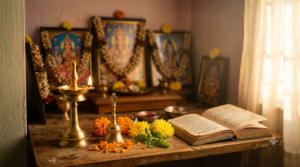
You do not need elaborate arrangements to begin. A clean space, a lit lamp, and a settled mind are enough. Follow these simple steps, and keep them consistent rather than perfect.
- Bathe and sit clean: most devotees chant in the morning after a bath, before a lit lamp.
- Face east or the puja area: keep an image or photo of Rayaru in front of you.
- Start with the Guru mantra: chant “Om Sri Raghavendraya Namaha” a few times to settle in.
- Recite the stotra slowly: pronounce each verse clearly instead of rushing through it.
- Read the meaning too: understanding the verses keeps your attention from wandering.
- Close with gratitude: offer a short prayer and sit quietly for a moment.
Some devotees chant the full stotra once, while others repeat it three or nine times. The traditional target of 108 recitations is usually taken up as a special sankalpa, not a daily rule.
Three Ways Devotees Approach Rayaru
Not everyone begins with the full Sanskrit hymn, and that is perfectly fine. The table below compares the three common practices, so you can pick what suits you today.
| Practice | What it is | Often chosen by | Good to know |
|---|---|---|---|
| Appannacharya’s Raghavendra Stotra | The full 32-verse hymn | Those comfortable with Sanskrit recitation | Contains seed syllables; learn correct pronunciation |
| Raghavendra Astakshara Stotra | A shorter hymn by Guru Jagannatha Dasa | Many women and new devotees, by custom | Can be recited anytime, anywhere |
| Guru Mantra | “Om Sri Raghavendraya Namaha” | All devotees, for daily japa | Commonly chanted 108 times |
By tradition, some families guide women toward the Astakshara Stotra, because the full stotra contains beejaksharas, or seed syllables. This is a matter of custom, and practices differ from home to home. When in doubt, follow the guidance of your own elders or acharya.
Best Days and Times to Chant
Thursday holds special meaning for Rayaru’s devotees, so many light a lamp and chant with extra care that day. Morning, after a bath, is the most common time across households. That said, the stotra can be chanted whenever you can give it honest attention.
Certain occasions carry added significance. Verse 27 mentions reciting the stotra 108 times during a solar or lunar eclipse, or under the Pushya star, for protection. The annual Aradhana at Mantralaya is another powerful window; for exact 2026 dates, always confirm on the official Mutt portal rather than social forwards.
How Raghavendra Stotra Benefits Grow With Regular Chanting
The clearest Raghavendra Stotra benefits appear only with consistency, not with a single dramatic session. A devotee who chants ten minutes daily for months usually notices more calm than someone who chants for hours once. Because the practice compounds, the small daily version wins.
Think of it like watering a plant. One flood does little, while steady watering brings steady growth. So set a length you can sustain, even if that means starting with the Guru mantra alone.
Do Beginners See the Same Raghavendra Stotra Benefits?
Yes, beginners can absolutely feel the Raghavendra Stotra benefits, though the experience arrives step by step. In the first weeks, most people simply notice a calmer start to the day. Because pronunciation improves with practice, the sense of connection deepens over the following months.
A gentle on-ramp helps here. Start with the short Guru mantra, add a few verses once you are comfortable, and build toward the full stotra. So the Raghavendra Stotra benefits are not reserved for scholars; they reward anyone who shows up sincerely and keeps at it.
Common Myths, Corrected
Plenty of misleading claims circulate online, and correcting them protects both your faith and your wallet. Here are the ones worth knowing before you chant or book anything.
Myth: the stotra instantly cures serious illness. The phalastuti speaks in devotional terms, and it should never replace medical care. Chant for peace and strength, but see a doctor for health problems.
Myth: you must chant a fixed 108 times or it “fails”. Sincerity matters more than the count. A single heartfelt recitation is valued in the tradition.
Myth: any “srsmatha” website is official. Only srsmatha.org is the official Mutt site. Fake portals with similar names may charge inflated fees or harvest your data, so route every booking and donation through the official portal alone.
A Note on Health, Faith, and Safety
Devotional practice supports wellbeing, yet it is not a medical treatment. If you are unwell, keep taking prescribed care and consult a qualified doctor. For elderly or ill devotees, long chanting sessions or a strenuous trip to Mantralaya should be paced sensibly, with water and rest.
Faith and medicine are not rivals here. Chant for comfort, clarity, and courage, and let qualified professionals handle diagnosis and cure. That balance is itself part of a wise, grounded devotion.
The Bottom Line
The Raghavendra Stotra rewards devotion that is steady, honest, and unhurried. Start small, chant with attention, and let the calm build over weeks rather than chasing an overnight result. Keep your faith at home and your bookings on the official portal, and you get the best of both.
If you are new, begin today with the Guru mantra and add the full stotra as your confidence grows. For deeper reading, see our guide to the miracles of Sri Raghavendra Swamy, and plan a visit with our Mantralaya accommodation guide.
Frequently Asked Questions
What are the main benefits of chanting the Raghavendra Stotra?
The main benefits are mental calm, better focus, self-discipline, and a devotional sense of protection. Devotees also feel renewed courage during hard times. These effects build gradually with regular, sincere chanting.
How many times should I chant the Raghavendra Stotra?
There is no strict rule for daily practice. Many devotees chant it once, three, or nine times, while 108 recitations are usually reserved for a special vow. Sincerity matters far more than the number.
Can women chant the Raghavendra Stotra?
Practices vary by family and tradition. Because Appannacharya’s stotra contains seed syllables, some households guide women toward the shorter Raghavendra Astakshara Stotra instead. It is best to follow the guidance of your own elders or acharya.
When is the best time to chant?
Morning, after a bath, is the most common and preferred time. Thursday carries special meaning for Rayaru’s devotees. Even so, you may chant whenever you can give the verses honest attention.
Does chanting the Raghavendra Stotra cure diseases?
The verses describe relief from illness in devotional language, but this is a matter of faith, not medicine. Chanting can bring peace and strength. It should never replace treatment from a qualified doctor.
Do I need to understand Sanskrit to chant it?
No, you can begin without knowing Sanskrit. Still, reading a clear translation alongside the verses deepens your focus and devotion. Understanding the meaning makes the practice more rewarding over time.
Is the Raghavendra Stotra the same as the Guru mantra?
No, they are two different things, though they work well together. The Guru mantra is the short eight-syllable “Om Sri Raghavendraya Namaha”, while the stotra is the full 32-verse hymn by Appannacharya. Beginners often start with the mantra and later take up the complete stotra.
Where can I book seva or rooms at Mantralaya?
All official seva, room, and e-hundi services are handled only on the official Mutt website, srsmatha.org. Independent guides like this one cannot take bookings or payments. Always verify you are on the official portal before paying anything.